
UTMB week turns Chamonix into trail running’s finish line, showroom and content studio at once. The sport remains real—but almost every kilometre now carries a launch, logo or transaction.
The race has not started, but Chamonix is already performing.
Runners move through the streets in unreleased shoes. Camera crews follow athletes between cafés and team houses. Shop windows change colour. Community runs leave every morning, product presentations fill the afternoons and launch parties begin before anyone reaches a start line.
For one week, Chamonix becomes the centre of trail running.
It also becomes its largest showroom.
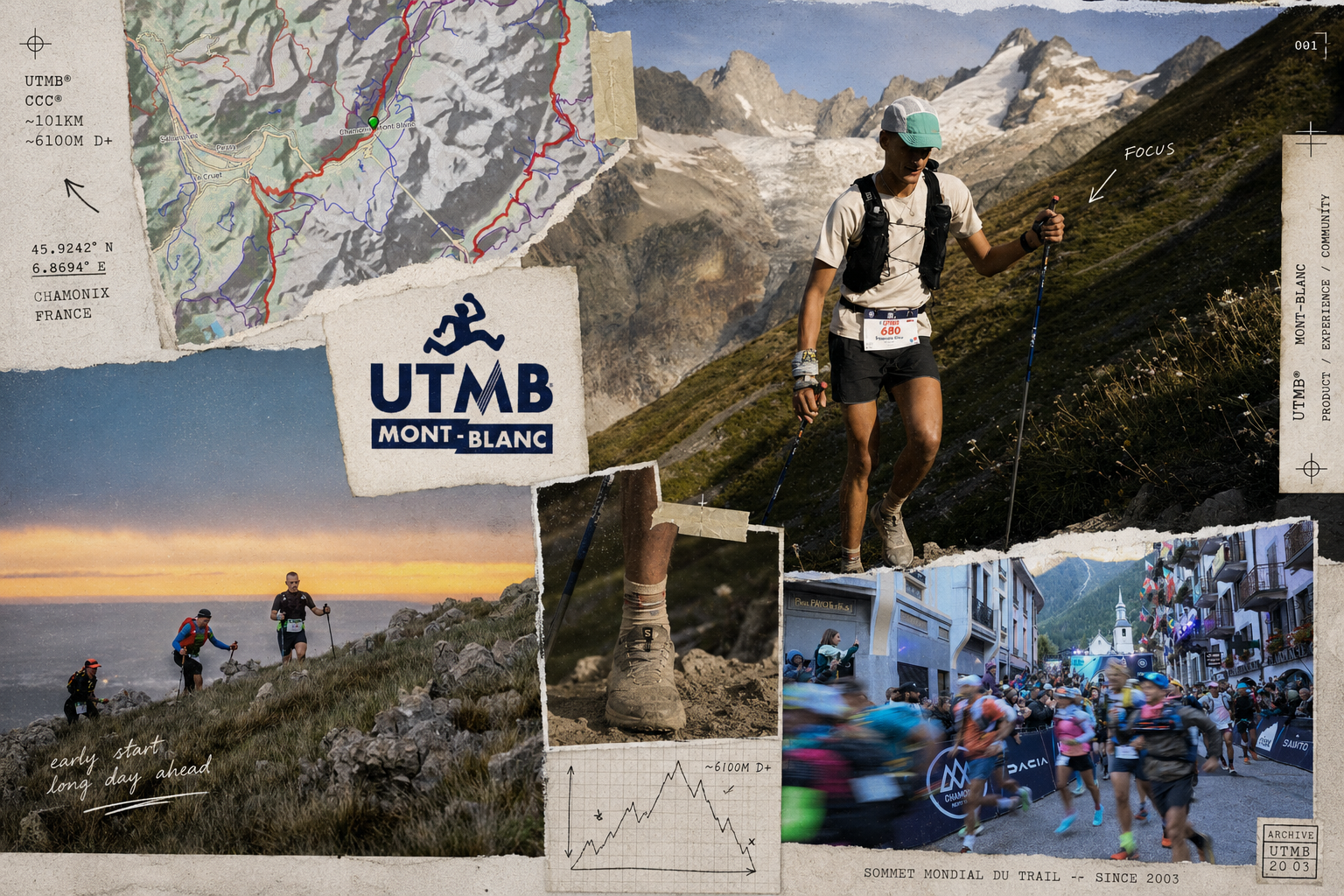
The 2026 HOKA UTMB Mont-Blanc runs from August 24 to 30. More than 10,000 participants from over 100 countries take part across eight races. The programme includes the 50K, 100K and 100M World Series Finals, culminating in the 174-kilometre UTMB with approximately 9,900 metres of climbing.
Those numbers explain why the industry comes.
The Ultra-Trail Village occupies the Place du Mont-Blanc from Monday to Saturday. Beside it, the Fan Experience runs into the evening. Athlete presentations, product displays, public discussions and sponsor activations operate within walking distance of race registration, the finish line and the crowded centre of town.
A conventional trade show separates commerce from use. Chamonix collapses them together.
A runner can test a shoe in the morning, watch its sponsored athlete race that afternoon and buy the same model before dinner. The trail becomes demonstration ground, campaign location and competitive arena at the same time.
HOKA’s role is visible before the first booth appears. The footwear company holds naming rights to the event and operates a dedicated programme from August 25 to 29, offering product trials, athlete meetings and technical consultation alongside hospitality.
Other brands build parallel worlds around the official programme.
Merrell has scheduled community runs, on-trail product demos, an evening relay and a Strava challenge. Nutrition companies attach products to aid-station logic. Watch manufacturers turn live tracking and pacing data into public demonstrations. Athletes move between racing, interviews, appearances and content production.
Nike does not need to name UTMB directly to use the moment. Its 2026 Chamo Camo collection translates the rock, forest and lichen around Mont Blanc into a coordinated pattern across trail shoes and race apparel. Chamonix is no longer simply where the equipment is used. It has become the visual material from which the equipment is made.
This concentration has real value.
Trail running products need terrain, distance and fatigue to reveal their limitations. Chamonix brings elite athletes, experienced amateurs, designers, retailers and media into the same valley. A shoe can be discussed by the person who developed it, tested by someone who may buy it and raced across technical ground within the same week.
Small brands also gain access to an international audience that would otherwise be difficult to assemble. Community runs can create genuine encounters. Athlete talks make racing knowledge public. The official programme includes discussions about women in trail running, adaptive athletes, mobility and the environmental weight of major events.
Not every gathering around a logo is empty.
The problem is scale.
When every brand wants its own run, athlete, house, launch and visual identity, the sport becomes difficult to see without its commercial layer. Innovation competes for attention before it competes on the trail. The most visible product is not necessarily the most useful one. It is often the product supported by the largest space, strongest athlete roster and most continuous stream of images.
The athlete becomes part competitor, part prototype carrier and part moving media inventory.
The amateur runner enters the same system. Shoes, mandatory equipment, nutrition, watches, photography and qualification are folded into an increasingly complete consumer journey. Participation remains physically demanding and emotionally meaningful, but it also feeds a commercial structure extending far beyond the entry fee.
Even the town changes function.
Chamonix has always sold access to mountains through guides, hotels, lifts and equipment. UTMB week accelerates that economy until almost every surface can carry a campaign. Trails become launch routes. Cafés become team headquarters. Hotel terraces become presentation stages.
None of this makes the racing artificial.
At 174 kilometres, branding cannot negotiate the next climb. A campaign cannot protect damaged feet, correct poor pacing or carry a runner through a second night. The race continues to produce conditions that resist the polished story surrounding it.
That resistance is why the commercial system remains credible.
Brands want proximity to something they cannot fully control. The weather changes. Favourites withdraw. New products fail. An unknown runner can move through the field without permission from the marketing plan.
UTMB still matters because the race is more difficult than the content built around it.
But the distinction between event and industry gathering has disappeared.
Chamonix is no longer simply hosting the conclusion of the trail-running season. It is where the sport presents its next products, selects its visible protagonists and decides which version of trail culture will travel through the following year.
The race did not disappear inside the trade show.
The trade show learned how to look like a race.